
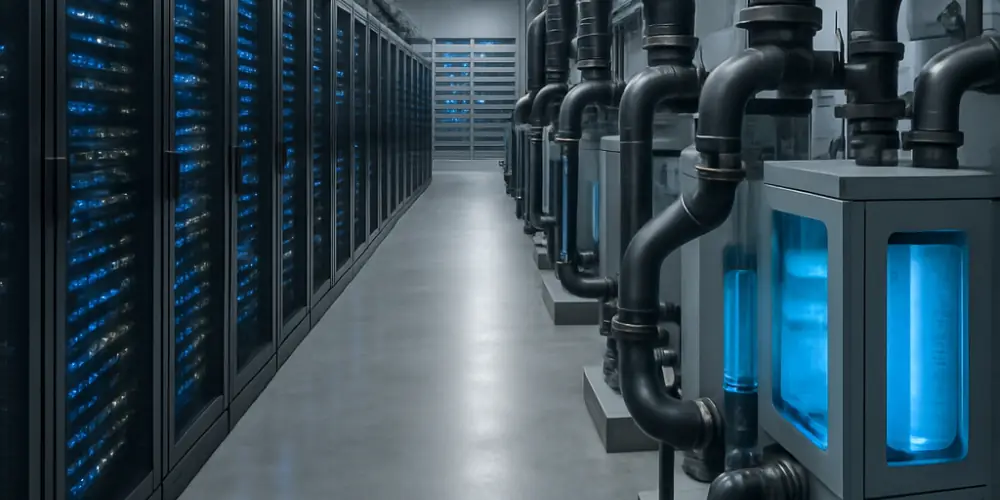
Data centers operate nonstop, running thousands of computer chips at high speeds. The heat these systems generate can be intense, yet advanced cooling techniques are helping them stay efficient and reliable. Some computer chips are literally bathed in fluids, cooled in ways that might remind one of a spa, ensuring they perform at maximum speed without overheating.
Jonathan Ballon, CEO of liquid cooling company Iceotope, explains, “We’ll have fluid that comes up and shower down, or trickle down, onto a component. Some things will get sprayed.”
In other cases, components sit in circulating baths that carry away heat, allowing servers to overclock continuously without risk of damage. One U.S. hotel chain even plans to reuse server heat to warm guest rooms, laundry, and swimming pools.
The Importance of Cooling
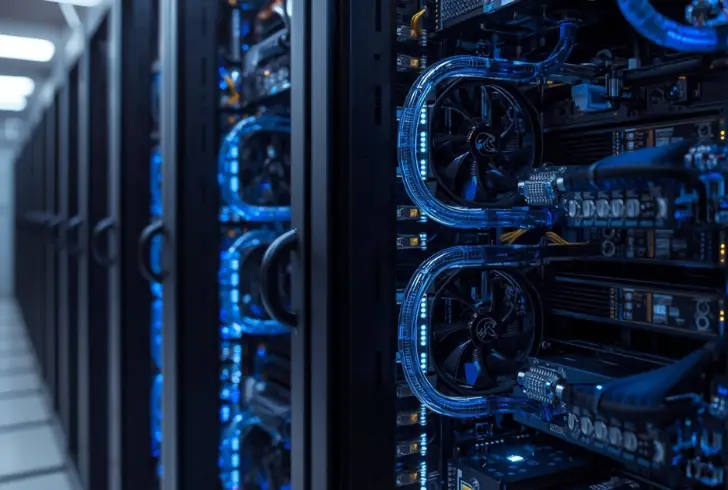
Without proper cooling, data centers can fail. A November incident at a U.S. data center temporarily shut down financial trading technology at CME Group, the world’s largest exchange operator. The company responded by increasing cooling capacity to prevent future outages.
Data center demand is surging, fueled by AI growth and cloud services. However, the enormous energy and water consumption of these facilities has drawn criticism. More than 200 environmental groups in the U.S. recently requested a pause on new data center construction.
Increasingly, traditional air-based cooling—fans blowing over hot components—is no longer sufficient. Computer chips are becoming more powerful, requiring advanced cooling solutions to handle extreme workloads.
Ballon notes, “Communities are pushing back on these projects. We require significantly less power and water. We don’t have any fans whatsoever – we operate silently.”
Liquid Cooling Innovations
Iceotope’s liquid cooling technology can reduce energy used for cooling by up to 80%. Their approach uses water to cool an oil-based fluid that interacts directly with servers. The water stays in a closed loop, eliminating continuous local water consumption.
Some cooling fluids are derived from fossil fuels, though none contain PFAS, harmful “forever chemicals.” Other systems rely on refrigerants, some containing PFAS, which can pose safety risks and contribute to greenhouse gas emissions. Two-phase cooling systems, for instance, rely on a refrigerant that changes from liquid to gas to absorb heat efficiently.
In certain setups, servers are immersed entirely in PFAS-containing refrigerants, creating potential safety concerns, according to Yulin Wang, former senior technology analyst at IDTechEx. Some companies are now switching to PFAS-free refrigerants.
Experimental Cooling Approaches
Data center operators have explored unique solutions over the years. Microsoft once submerged servers in the sea near Orkney, Scotland, to leverage cold seawater for cooling. While the project was eventually closed, early results were promising, showing a power usage effectiveness (PUE) rating of 1.07—far more efficient than most land-based data centers. The setup required no water and revealed that automated, hands-off systems often have fewer operational issues.
Microsoft continues research into liquid-based cooling methods, including microfluidics, which channels liquid through layers of silicon chips at a nanometer scale. This technique allows precise cooling deep inside the hardware.
Other researchers are developing passive solutions. In July, Renkun Chen and colleagues at the University of California San Diego introduced a pore-filled membrane cooling system. This design uses heat itself to drive fluid circulation, similar to how water moves through a tree, offering a potential low-energy method to cool chips without pumps or fans.
AI and Cooling Demands
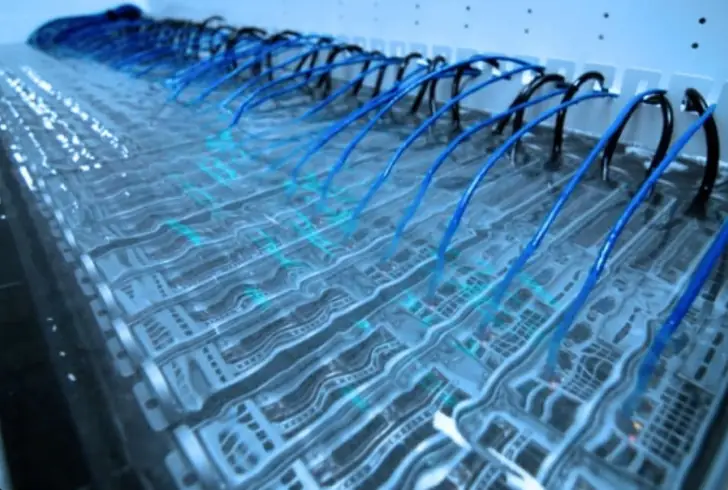
The rise of AI and large language models (LLMs) adds pressure on cooling systems. Sasha Luccioni, AI and climate lead at Hugging Face, highlights that advanced AI models consume massive amounts of energy.
Reasoning models, which generate multi-step outputs, can require hundreds or thousands of times more energy than simpler chatbots. Efficient cooling is therefore essential to maintain performance while minimizing environmental impact.
Ballon points out that even AI-intensive systems are reaching the limits of productivity for current server technology, making cooling solutions even more critical.
Reducing Environmental Impact
Innovations in cooling are increasingly tied to sustainability. By using liquid cooling loops and reducing reliance on fans and water, data centers can dramatically lower energy and water consumption. Liquid-based solutions also allow overclocking safely, boosting computational performance without overheating.
As AI and computing demands continue to rise, the focus on efficient, low-impact cooling methods will remain a key challenge for the data center industry.
Keeping data center technology cool goes beyond simple fans and airflow. From showers of fluid to baths of circulating oil-based liquids, and from microfluidic channels to passive membrane cooling, these innovations protect high-performance servers while reducing environmental impact.
With AI and computing workloads intensifying, liquid and advanced cooling methods are becoming essential, offering efficient, safe, and sustainable ways to manage the heat of modern technology.